One of the biggest questions aspiring mobile mechanics ask is: "How much money do I actually need to start?" The answer isn't one-size-fits-all. Some mobile mechanics launch with less than $5,000, while others invest $50,000+ for a premium operation.
The good news? A mobile mechanic business has significantly lower startup costs than a traditional auto repair shop, which can require $100,000-$300,000+ in capital. You don't need expensive commercial real estate, lifts, or a building full of equipment. You can start lean and scale as you grow.
In this comprehensive guide, we'll break down every cost involved in starting a mobile mechanic business with three realistic budget scenarios: bootstrap, moderate, and premium. By the end, you'll know exactly what you need to invest to launch successfully. (If you haven't already, start with a solid mobile mechanic business plan to map out your financial projections.)
Table of Contents
Mobile Mechanic Startup Costs Overview
Before diving into specific budget scenarios, let's understand the major cost categories you'll encounter:
Major Cost Categories
1. Vehicle (30-50% of startup budget)
Your service vehicle is your mobile workshop. You'll need either a cargo van, pickup truck with cap, or SUV depending on your service approach. This is typically your largest single expense. See our guide on the best vans for mobile mechanics for detailed comparisons.
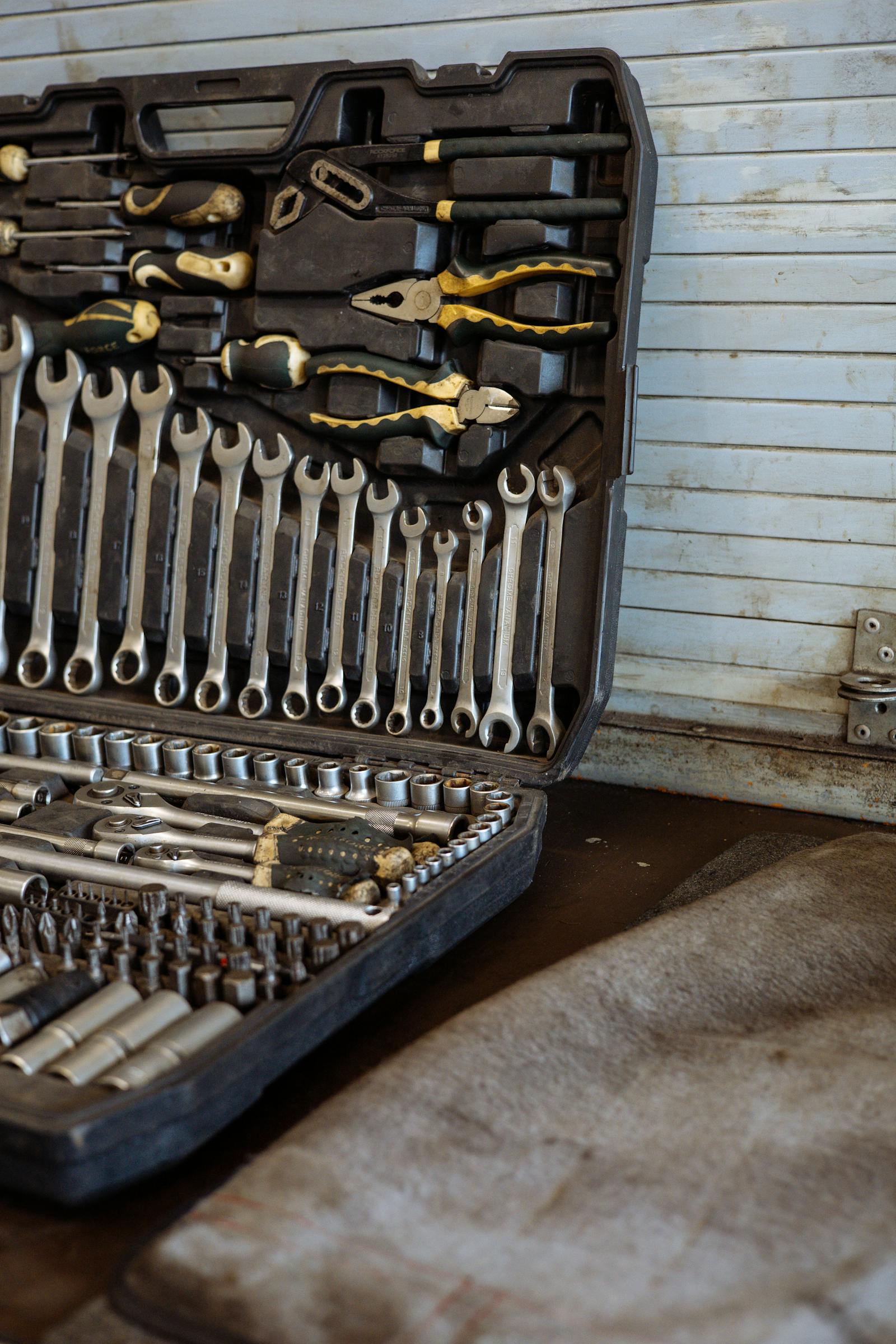
2. Tools and Equipment (20-30% of budget)
Professional-grade hand tools, power tools, diagnostic equipment, and specialty tools. Quality matters here, cheap tools break and cost you more long-term. Check our complete mobile mechanic tools list for what you actually need.
3. Insurance (10-15% of first-year costs)
Commercial auto insurance, general liability, garage keepers insurance, and tools/equipment coverage. Non-negotiable for protecting your business. Read our mobile mechanic insurance guide to understand your coverage options.
4. Licensing and Legal (3-5% of budget)
Business formation, licenses, permits, and initial legal compliance costs. Varies significantly by state and locality. Check our state-by-state license requirements guide to know exactly what you need.
5. Marketing and Branding (5-10% of budget)
Vehicle wrap or lettering, website, business cards, initial advertising. Essential for getting customers from day one.
6. Technology and Software (2-5% of budget)
Business management software, diagnostic software subscriptions, payment processing setup, computer/tablet.
7. Initial Inventory and Supplies (5-10% of budget)
Common fluids, filters, parts you'll stock, shop supplies, safety equipment.
8. Working Capital Reserve (10-15% of budget)
Cash reserve for slow periods, unexpected expenses, and covering costs while building customer base.
Quick Estimate:
As a general rule, plan for $15,000-$25,000 for a solid, professional mobile mechanic startup if you're buying a used vehicle and quality tools. You can start for less if you already own a suitable vehicle and some tools, or you may invest more for a new vehicle and top-tier equipment.
Mobile Mechanic Startup Cost Comparison: 3 Budget Tiers
Here's a side-by-side comparison of what you can expect to spend across three realistic budget tiers for starting a mobile mechanic business in 2026:
| Category | Bootstrap ($5K-10K) | Mid-Range ($15K-25K) | Premium ($35K-50K+) |
|---|---|---|---|
| Vehicle | Used van $3K-6K | Certified pre-owned $12K-18K | New Transit/Sprinter $38K-48K |
| Tools | Basic set $800-1,500 | Professional set $2K-4K | Snap-on/Matco $5K-10K |
| OBD2 Scanner | Basic $100-300 | Mid-range $500-1,500 | Professional $2K-5K |
| Insurance | Minimum $1,200/yr | Standard $2,400/yr | Full coverage $3,600/yr |
| Business License | $50-500 | $50-500 | $50-500 |
| Marketing | DIY $200-500 | Mixed $1K-3K | Agency $3K-5K |
| Software | Free/basic $0-30/mo | Trackara Pro $49.99/mo | Trackara Pro $49.99/mo |
| TOTAL | $5,350-9,100 | $18,050-27,500 | $51,750-69,100 |
Bootstrap Budget: $5,000-$10,000
This is the bare minimum to launch a legitimate mobile mechanic business. You'll make compromises and sacrifices, but it's doable if you're resourceful and already have some assets.
Bootstrap Scenario Assumptions
You already own a suitable vehicle (pickup truck or SUV) and have some basic tools from previous mechanic work. You're willing to work from home, handle all marketing yourself, and grow slowly with reinvested profits.
Bootstrap Budget Breakdown
| Expense Category | Bootstrap Cost | Notes |
|---|---|---|
| Vehicle | $0 | Use existing personal truck/SUV |
| Truck Cap/Topper | $800 | Used cap for weather protection |
| Basic Tool Set | $1,500 | Fill gaps in existing collection |
| Diagnostic Scanner | $800 | Mid-grade OBD-II scanner |
| Portable Equipment | $600 | Air compressor, work lights, jack/stands |
| Insurance (6 months prepaid) | $2,000 | Commercial auto + basic liability |
| Business Formation & Licenses | $500 | LLC formation, basic permits |
| Vehicle Lettering | $400 | Basic vinyl lettering |
| Website & Marketing | $300 | DIY website, business cards, basic ads |
| Software & Tech | $200 | First 3 months of business software |
| Initial Parts/Supplies | $800 | Oil, filters, common fluids |
| Working Capital | $1,100 | Emergency reserve |
| TOTAL BOOTSTRAP BUDGET | $9,000 |
Bootstrap Reality Check
Pros of Bootstrap Approach:
- Minimal financial risk
- No debt or investor obligations
- Forces lean operation and efficiency
- Can start immediately with limited funds
Cons of Bootstrap Approach:
- Limited professional appearance (using personal vehicle)
- Can't take on all job types due to equipment limitations
- Slower growth due to capital constraints
- May need second job initially for income stability
- Higher risk of tool failure (used/budget tools)
Bootstrap Success Tip: If going the bootstrap route, focus intensely on high-margin services you can provide with limited equipment: oil changes, battery replacement, brake pads, diagnostics. Build cash reserves quickly and reinvest in better equipment within 3-6 months.
Moderate Budget: $20,000-$30,000
This is the "sweet spot" budget for most mobile mechanics. It provides professional equipment and appearance without overextending financially.
Moderate Scenario Assumptions
You're purchasing a reliable used cargo van, investing in quality tools that will last, getting proper insurance coverage, and setting up professional marketing. This is a serious business from day one.
Moderate Budget Breakdown
| Expense Category | Moderate Cost | Notes |
|---|---|---|
| Used Cargo Van | $12,000 | 2015-2018 Ford Transit, ~80k miles |
| Van Shelving/Organization | $1,200 | Professional shelving system |
| Professional Tool Set | $5,000 | Quality hand tools, power tools |
| Diagnostic Equipment | $1,800 | Professional-grade scanner, meters |
| Portable Equipment | $1,200 | Air compressor, lights, jack, specialty tools |
| Insurance (1 year prepaid) | $4,500 | Full coverage package |
| Business Formation & Licenses | $800 | LLC, permits, professional setup |
| Vehicle Wrap/Branding | $2,500 | Partial wrap or premium lettering |
| Website & Marketing | $1,500 | Professional website, business cards, initial ads |
| Software & Tech | $800 | Annual software subscription, tablet |
| Initial Parts/Supplies | $1,500 | Well-stocked inventory |
| Working Capital | $3,200 | 3-month operating reserve |
| TOTAL MODERATE BUDGET | $36,000 |
Moderate Budget Analysis
Pros of Moderate Approach:
- Professional appearance from day one
- Quality tools and equipment that last
- Can handle wide variety of jobs
- Sufficient working capital for growth
- Easier to charge premium prices with professional setup
Cons of Moderate Approach:
- Requires significant capital investment or financing
- Higher financial risk if business doesn't succeed
- Pressure to generate revenue to cover debt payments
For most aspiring mobile mechanics, this moderate budget represents the best balance of professional capability and manageable financial risk. You're set up to compete effectively while not overextending yourself financially.
Premium Budget: $40,000-$60,000
This is the "start strong" approach with top-tier equipment, a newer vehicle, and comprehensive marketing.
Premium Scenario Assumptions
You're purchasing a nearly-new cargo van, investing in professional-grade tools, getting a full vehicle wrap, and launching with a robust marketing campaign. This is a serious investment for serious business growth.
Premium Budget Breakdown
| Expense Category | Premium Cost | Notes |
|---|---|---|
| New/Certified Pre-Owned Van | $28,000 | 2021-2023 Ford Transit with warranty |
| Premium Van Shelving | $2,500 | Custom shelving with drawers, bins |
| Premium Tool Set | $10,000 | Snap-on, Mac, or equivalent |
| Advanced Diagnostic Equipment | $3,500 | Dealer-level scanner, scope, testers |
| Complete Portable Setup | $2,000 | Top-tier compressor, lights, specialty tools |
| Comprehensive Insurance | $6,000 | Premium coverage with low deductibles |
| Full Legal Setup | $1,200 | Attorney-assisted LLC, all permits |
| Full Vehicle Wrap | $4,000 | Complete professional wrap design |
| Professional Marketing | $3,000 | Website, SEO, initial ad campaigns |
| Premium Software Package | $1,200 | Premium business software, tablet, laptop |
| Extensive Parts Inventory | $2,500 | Comprehensive stock of common parts |
| Large Working Capital | $6,100 | 6-month operating reserve |
| TOTAL PREMIUM BUDGET | $70,000 |
Premium Budget Analysis
Pros of Premium Approach:
- Maximum professional credibility
- Can charge highest rates in market
- Vehicle warranty eliminates downtime risk
- Best tools mean faster, better work
- Large working capital cushion reduces stress
- Aggressive marketing generates customers quickly
Cons of Premium Approach:
- Significant capital required
- High debt payments if financed
- Longer break-even timeline
- Some features may be unnecessary initially
The premium approach makes sense if you have access to capital, want to establish market dominance quickly, or are in a competitive market where professional appearance matters significantly.
Software Costs: Choosing the Right Business Management Tool
One of the most overlooked startup costs is business management software. The right software saves you hours every week on invoicing, scheduling, and bookkeeping -- and the wrong choice can drain your budget fast.
Most auto repair management software like AutoLeap ($179/mo) and Shopmonkey ($239/mo) are built for brick-and-mortar shops and priced accordingly. Trackara Pro was built specifically for mobile mechanics at $49.99/month -- giving you invoicing, scheduling, client management, mileage tracking, and OBD2 diagnostics in one app.
Here's what that difference looks like over your first year:
| Software | Monthly Cost | Annual Cost | Built for Mobile? |
|---|---|---|---|
| AutoLeap | $179/mo | $2,148/yr | No (shop-focused) |
| Shopmonkey | $179/mo | $2,148/yr | No (shop-focused) |
| Shopware | $200+/mo | $2,400+/yr | No (shop-focused) |
| Trackara Pro | $49.99/mo | $599.88/yr | Yes -- mobile-first |
That's a savings of $1,548/year compared to shop-focused alternatives -- money you can put toward tools, marketing, or your operating reserve. And unlike those platforms, Trackara Pro includes mobile-specific features like mileage tracking and on-site OBD2 diagnostics that other software simply doesn't offer.
Ongoing Monthly Expenses
Beyond startup costs, you need to understand your monthly operating expenses. These are the costs you'll pay every month regardless of how many jobs you complete.
Typical Monthly Operating Costs
| Expense | Monthly Cost | Annual Cost |
|---|---|---|
| Vehicle Payment (if financed) | $300-500 | $3,600-6,000 |
| Commercial Auto Insurance | $200-350 | $2,400-4,200 |
| Liability Insurance | $150-250 | $1,800-3,000 |
| Fuel | $300-500 | $3,600-6,000 |
| Vehicle Maintenance | $100-200 | $1,200-2,400 |
| Software Subscriptions | $80-150 | $960-1,800 |
| Marketing & Advertising | $300-600 | $3,600-7,200 |
| Phone & Internet | $80-120 | $960-1,440 |
| Accounting/Bookkeeping | $100-200 | $1,200-2,400 |
| Tools & Supplies | $150-300 | $1,800-3,600 |
| Licenses & Permits | $40-80 | $480-960 |
| TOTAL MONTHLY | $1,800-3,250 | $21,600-39,000 |
Note: This doesn't include parts for customer jobs (which you mark up and pass through) or your owner's salary.
Break-Even Analysis
With average monthly expenses of $2,400 and average gross profit of $140 per job (70% margin on $200 ticket):
You need approximately 18 jobs per month to break even on operating expenses (before taking any salary).
To generate $50,000 annual owner salary plus cover expenses, you need about 50-60 jobs per month at $200 average ticket.
Hidden Costs to Expect
Many new mobile mechanics underestimate these often-overlooked expenses:
1. Tool Replacement and Upgrades
Budget: $1,000-2,000/year
Tools break, wear out, or get lost. You'll also discover you need specialty tools you didn't initially purchase. This ongoing cost catches many by surprise.
2. Vehicle Repairs and Maintenance
Budget: $1,500-3,000/year
Your service vehicle works hard. Brakes, tires, oil changes, and unexpected repairs add up quickly.
3. Waste Disposal
Budget: $300-600/year
Properly disposing of used oil, fluids, batteries, and other automotive waste isn't free.
4. Continuing Education and Certifications
Budget: $500-1,500/year
ASE certification renewals, training courses, technical subscriptions to stay current with vehicle technology.
5. Unpaid Time
Impact: 25-35% of your time
Driving between jobs, administrative tasks, getting parts, marketing, bookkeeping, significant time you can't bill for.
6. Bad Debts
Budget: 2-5% of revenue
Some customers won't pay. Budget for occasional losses.
7. Seasonal Slowdowns
Impact: 20-40% revenue drop
Many markets see significant slowdowns during holidays or certain seasons. Your working capital needs to cover these periods.
Financing Options
If you don't have cash for startup costs, here are your financing options:
1. Personal Savings (Best Option)
Pros: No debt, no interest, complete control
Cons: Requires waiting to accumulate capital, risk to personal finances
2. SBA Microloan
Amount: Up to $50,000
Terms: 6 years typical, 8-13% interest
Requirements: Business plan, good credit, collateral
Best for: Moderate to premium budgets
3. Equipment Financing
Amount: 80-100% of equipment value
Terms: 3-5 years, 6-12% interest
Best for: Financing specific tools or vehicle
4. Business Credit Card
Amount: $5,000-25,000 credit line
Terms: 15-25% APR (pay off quickly!)
Best for: Short-term needs, emergency coverage, building business credit
5. Personal Loan
Amount: $5,000-50,000
Terms: 3-7 years, 6-15% interest
Best for: Good personal credit, faster approval than business loans
6. Home Equity Loan/HELOC
Amount: Up to 80% of home equity
Terms: 5-30 years, 5-8% interest
Warning: Your home is collateral, serious risk
7. Friends/Family Investment
Terms: Negotiable
Warning: Get everything in writing, understand relationship risks
Financing Warning: Only borrow what you can realistically repay even if the business struggles. A $500/month loan payment on a $25,000 loan is manageable. A $1,200/month payment on $60,000 could sink you if customer acquisition is slow.
Cost-Saving Strategies
Smart mobile mechanics find creative ways to reduce startup costs without compromising quality:
Vehicle Savings
- Buy used from retiring mechanics: Often selling fully equipped vehicles at good prices
- Consider fleet auction vehicles: Well-maintained, lower mileage than typical used
- Start with your truck + cap: Upgrade to a proper mobile mechanic van after 6-12 months of profit
- Negotiate extended warranties: Third-party warranties for peace of mind
Tool Savings
- Buy quality used tools: Estate sales, pawn shops, retiring mechanics
- Mix premium and value brands: Premium sockets/wrenches, value brand for commodity items (see our recommended tools list)
- Tool truck financing: 0% financing deals from Snap-on, Mac, Matco
- Build gradually: Buy specialty tools as needed, not all upfront
Insurance Savings
- Shop multiple providers: Quotes can vary 30-50%
- Bundle policies: One insurer for all coverage = discounts
- Higher deductibles: Can cut premiums 15-25%
- Pay annually: Avoid monthly payment fees
Marketing Savings
- DIY website: Wix, Squarespace, or WordPress instead of hiring developer
- Start with lettering, add wrap later: Save $2,000-3,000 initially
- Focus on free marketing first: Google Business Profile, social media, networking
- Leverage review sites: Free exposure through Yelp, Google, Facebook
Return on Investment Timeline
When can you expect to recoup your initial investment?
Realistic ROI Scenarios
Bootstrap Budget ($9,000)
- Monthly net profit potential: $3,000-4,000 (after owner salary)
- Time to recoup investment: 3-4 months
- Year 1 profit potential: $20,000-30,000
Moderate Budget ($36,000)
- Monthly net profit potential: $4,000-6,000
- Time to recoup investment: 8-12 months
- Year 1 profit potential: $25,000-40,000
Premium Budget ($70,000)
- Monthly net profit potential: $6,000-10,000
- Time to recoup investment: 12-18 months
- Year 1 profit potential: $30,000-50,000
These timelines assume steady customer acquisition, efficient operations, and reinvesting some profits back into the business. Most mobile mechanics reach full profitability (owner salary + business profit) within 6-12 months.
Maximize Your Investment with the Right Tools
Don't let administrative headaches eat into your profitability. Trackara Pro helps you squeeze every dollar out of your investment with efficient scheduling, instant invoicing, and automated customer follow-ups that drive repeat business.
Start Your Free TrialThe Most Affordable Software for Your Startup
Trackara Pro gives you everything you need to run your mobile mechanic business, invoicing, scheduling, mileage tracking, CRM, and more, for just $49.99/month. That's $1.67/day.
Start Your Free Trial →$49.99/month · All features included · Cancel anytime
Final Thoughts on Startup Costs
The beauty of a mobile mechanic business is its scalability. You can start with $5,000 and grow organically, or you can invest $50,000+ to hit the ground running professionally. There's no single "right" answer, the right budget depends on your financial situation, risk tolerance, and goals.
What matters most isn't how much you spend, but how wisely you invest. A $10,000 startup with excellent marketing and customer service can outperform a $50,000 startup with poor execution.
Focus on the fundamentals:
- Reliable transportation
- Quality tools that let you work efficiently
- Proper insurance to protect your investment
- Professional marketing to attract customers
- Efficient systems to manage your business (like Trackara Pro)
Get these five things right at whatever budget level you choose, and you'll build a successful mobile mechanic business.
Next Steps:
- Review our complete startup guide
- Create your business plan with financial projections
- Check licensing requirements for your state
- Review the essential tools checklist
- Set up Trackara Pro to manage your business professionally from day one